Primarily during the late 19th and early 20th centuries, but also slightly earlier and later, the countryside saw the construction of the farmstead houses mostly like villas in the historicist style. Not only the main house, but also all the farm buildings were built in this style. These buildings were more prominent, multi-story, with towers and large windows, and looked quite ostentatious against the backdrop of traditional Estonian village architecture. Manor houses began to be built with great enthusiasm in Tarvastu and Paistu as well.
KILLE FARM'S STORY
Kille Farmstead was originally part of the Abja-Vanamõisa cattle manor and a watermill known as Killimois. In 1857, the local miller Eduard Hassel purchased Kille Farm for 2500 rubles. In 1894, the miller passed away, and the farm, along with the mill, was inherited by his nephew Edgar Friedrich Sass. During the German occupation in 1918, Edgar sold the watermill along with the accompanying 8.6 hectares of land.
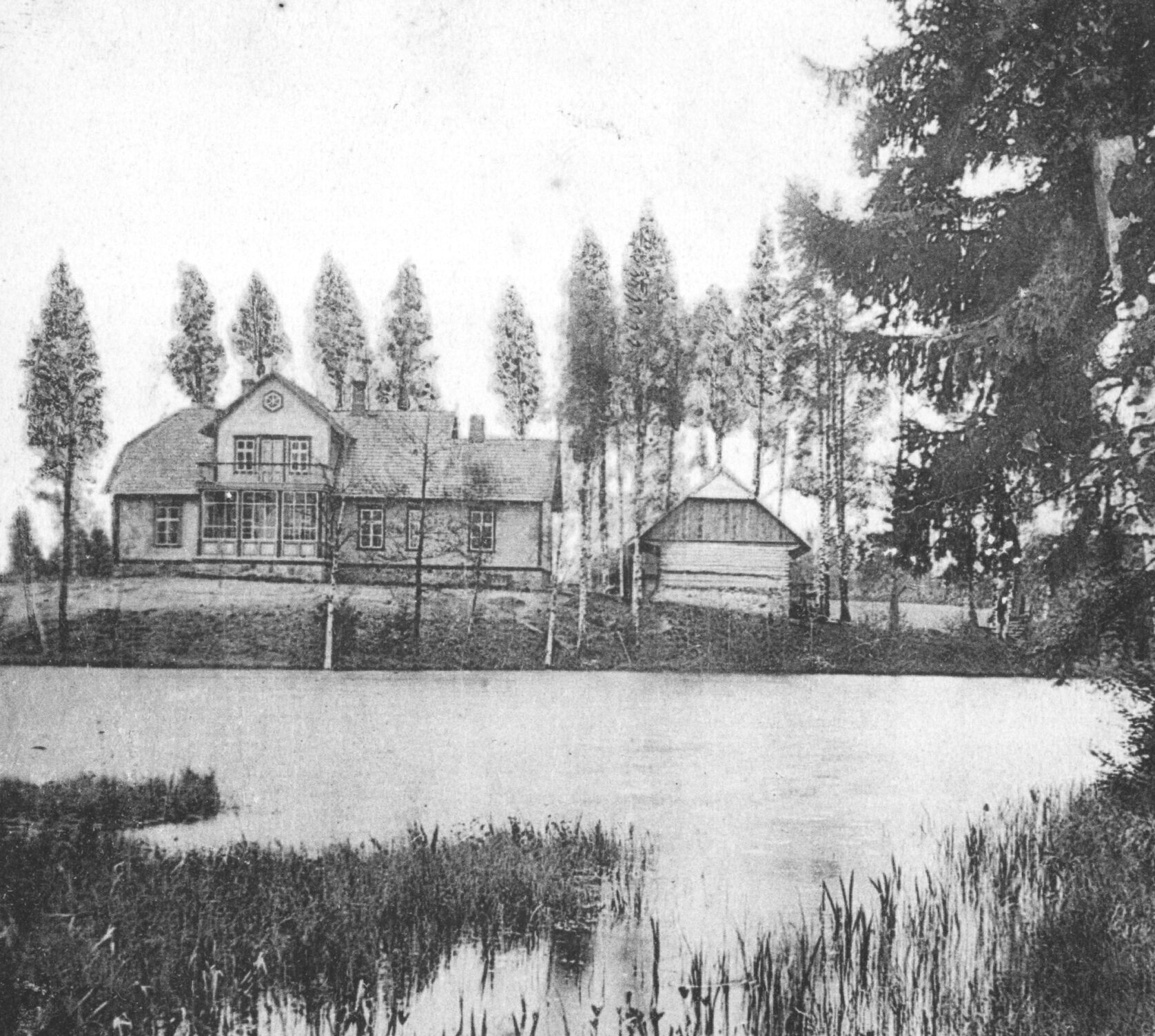
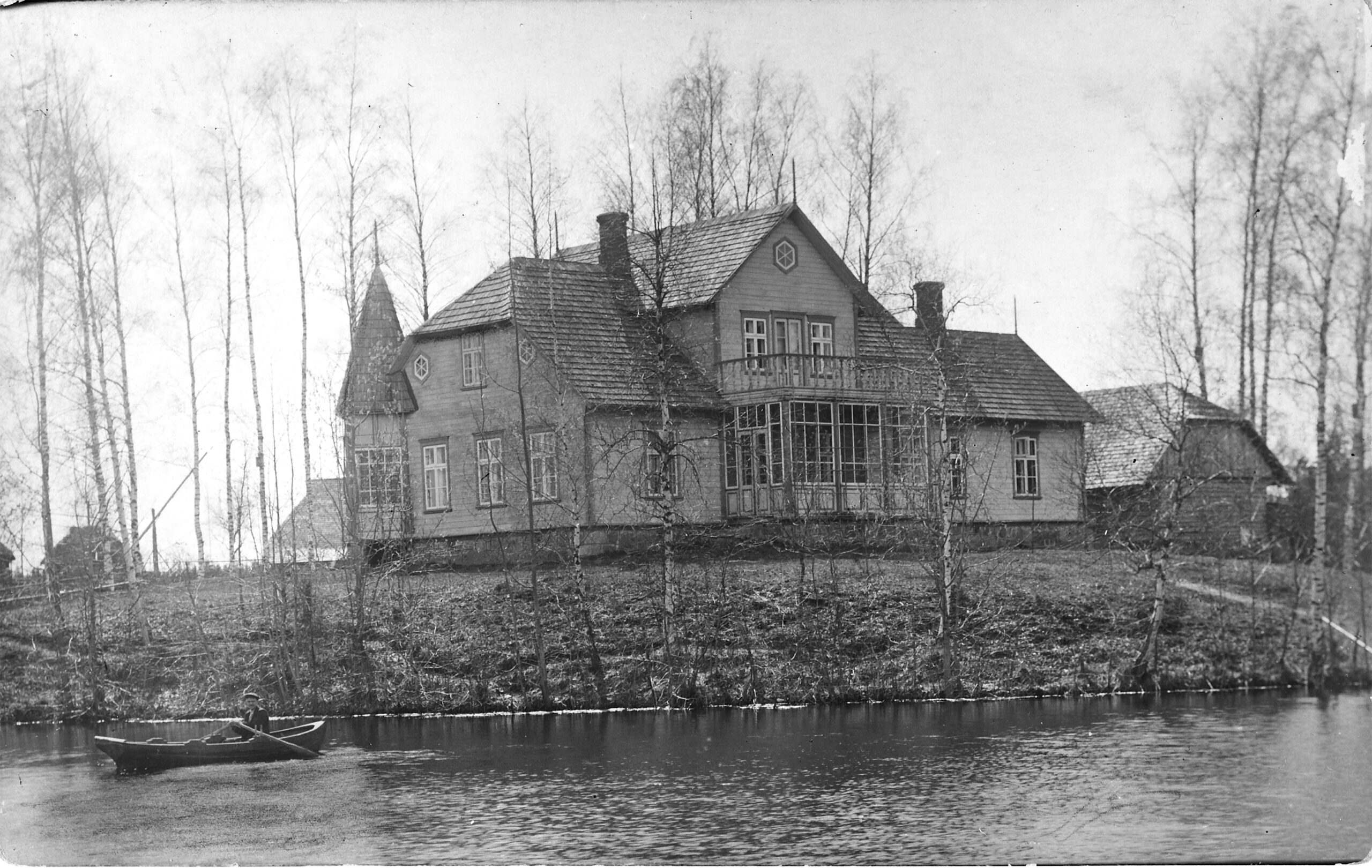
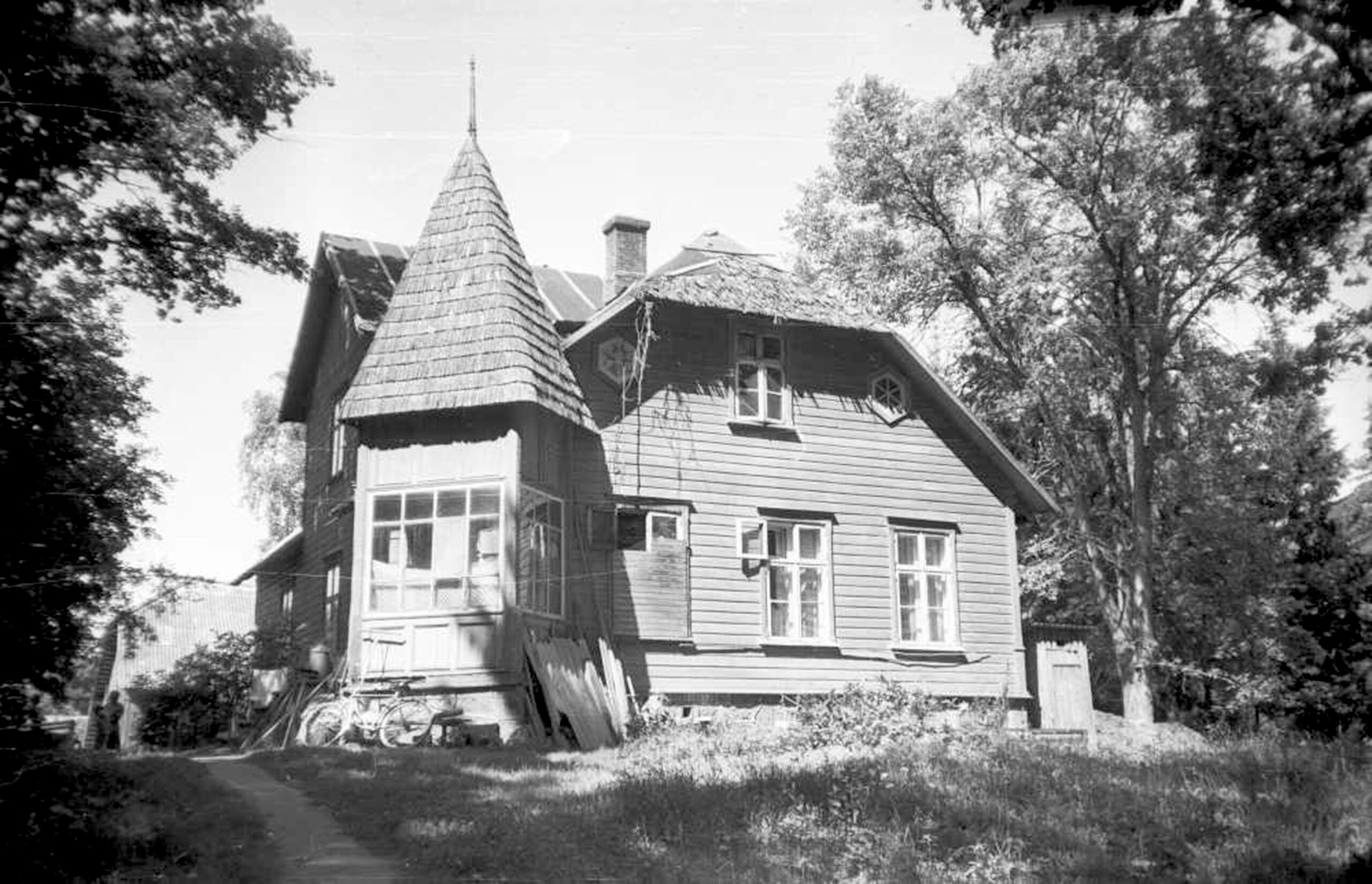
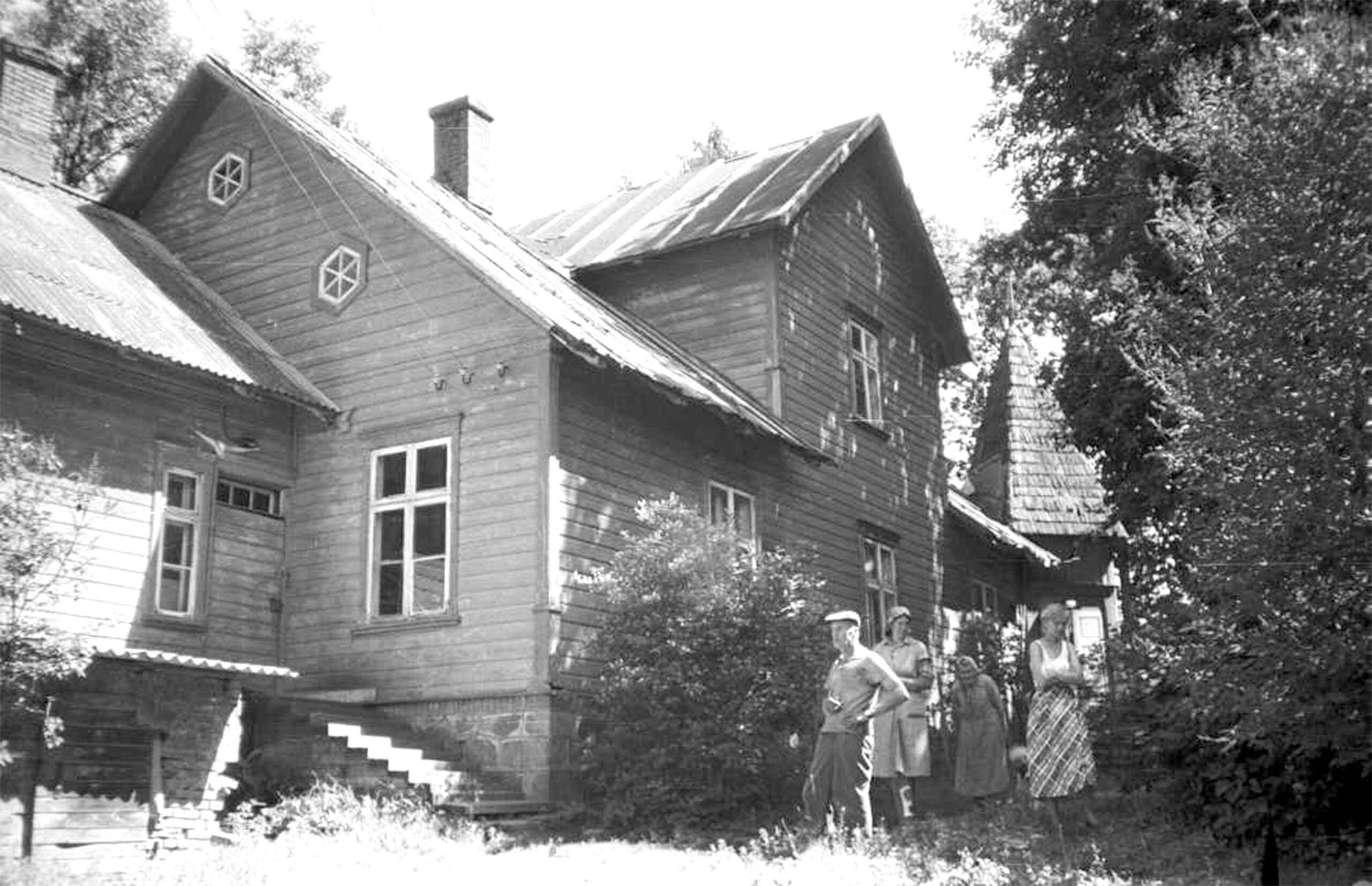
The manor house of Kille Farm, built in 1899, stood out with its intricate exterior design compared to older farmsteads. The building features a corner tower, a glass veranda with a balcony, and roof structures that rise higher than the main house on both sides. The log house, clad with horisontal siding, sits on a relatively high stone foundation, with one end of the roof partially hipped and the other end featuring a narrower and lower gable-roofed extension. The house has three chimneys and three entrances.
In 1931, Edgar passed away without children, and the farm was inherited by five relatives. Four of the heirs sold their shares to Aleksander Abel, who, along with the fifth heir, sold the farm to August Kõresaar for 10,000 kroons in 1939. Later, Kille Farm passed on to the descendants of the farm’s foreman. Today, the manor house still stands and remains privately owned.
Kille paisjärv, Kille talu elumaja (ehitatud 1899), u 1910 Foto: VM VMF 518:729 F 10288, Viljandi Muuseum;
Kille paisjärv, Kille talu elumaja (ehitatud 1899), u 1910 Foto: VM VMF 518:729 F 10288, Viljandi Muuseum;
Puisi talu elumaja Foto: ERM Fk 2865:69, Eesti Rahva Muuseum
Kille paisjärv, Kille talu elumaja (ehitatud 1899), u 1910 Foto: VM VMF 518:729 F 10288, Viljandi Muuseum;