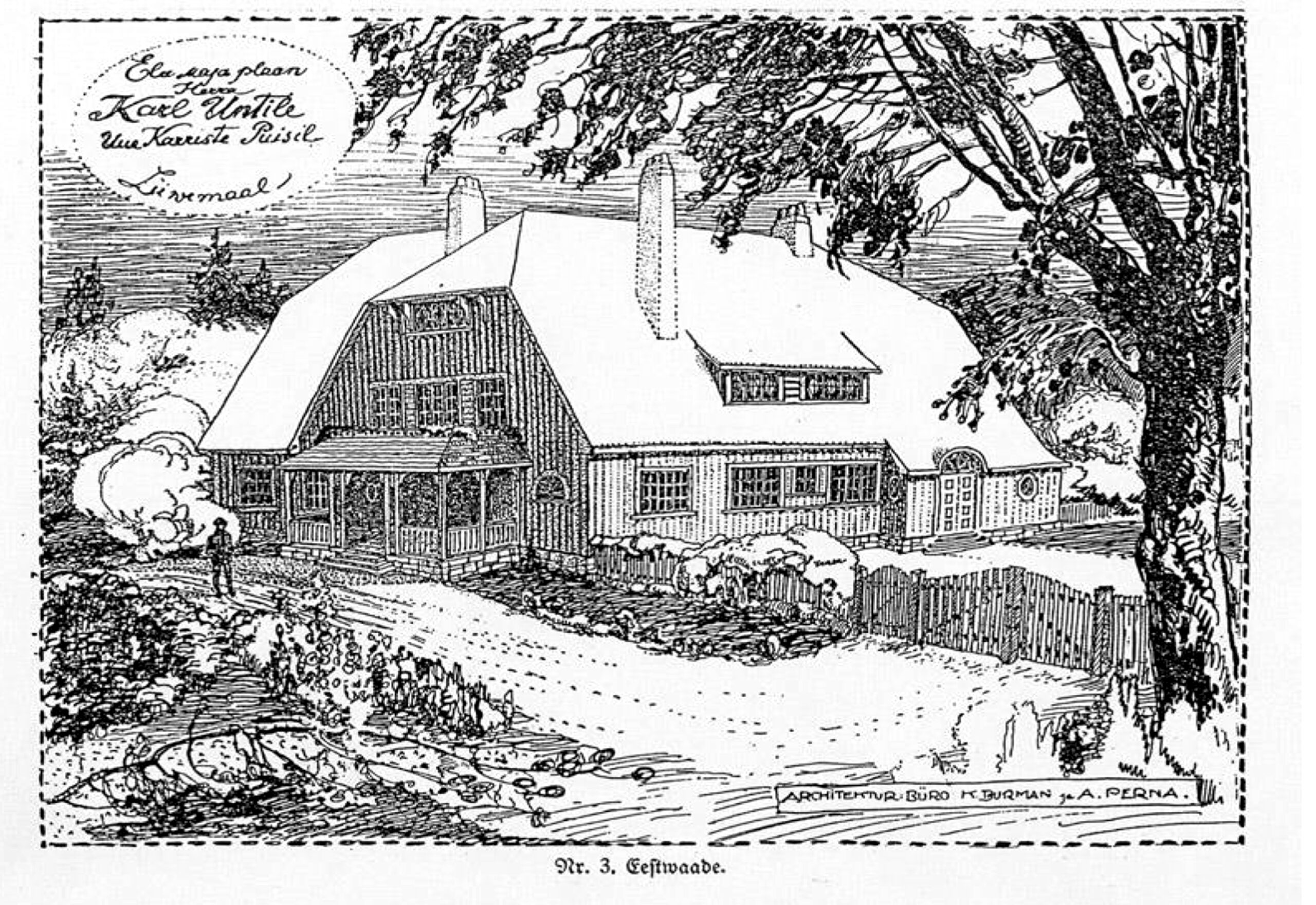
Puisi Farmstead, a large estate spanning 208.5 hectares, was purchased in 1865 by a local man named Karl Unt for 6425 rubles and 66 kopeks. When Hans, the son who had inherited the farm from his father, Karl, passed away in 1905, the heirs decided that Hans’s brother, Karl, would become the new master of the farmstead. He was the first farmer in Estonia to hire an architect to design his own house. The architectural firm of Karl Burman and Artur Perna created the construction plan for the new house shortly before World War I, in 1913.
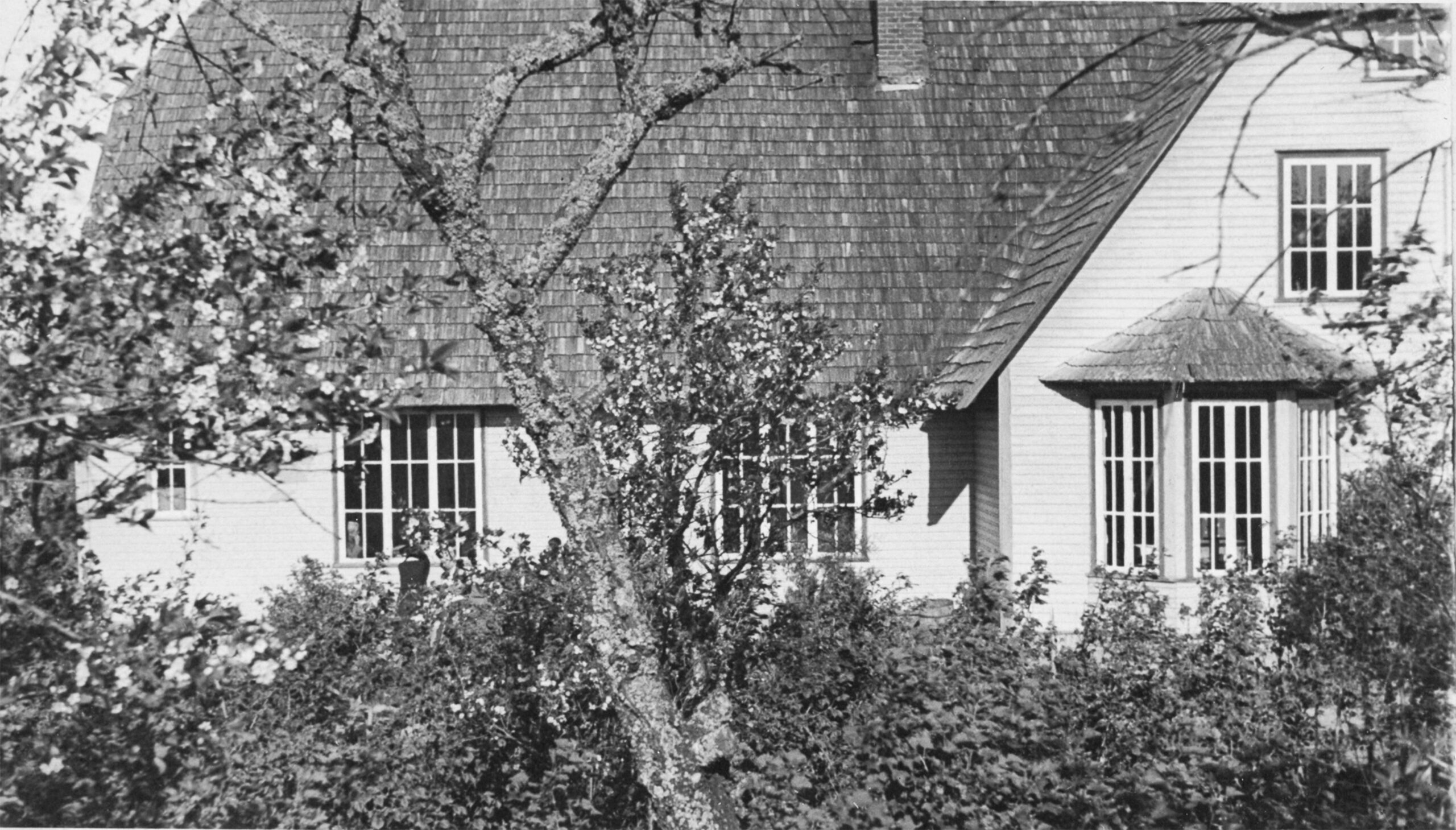
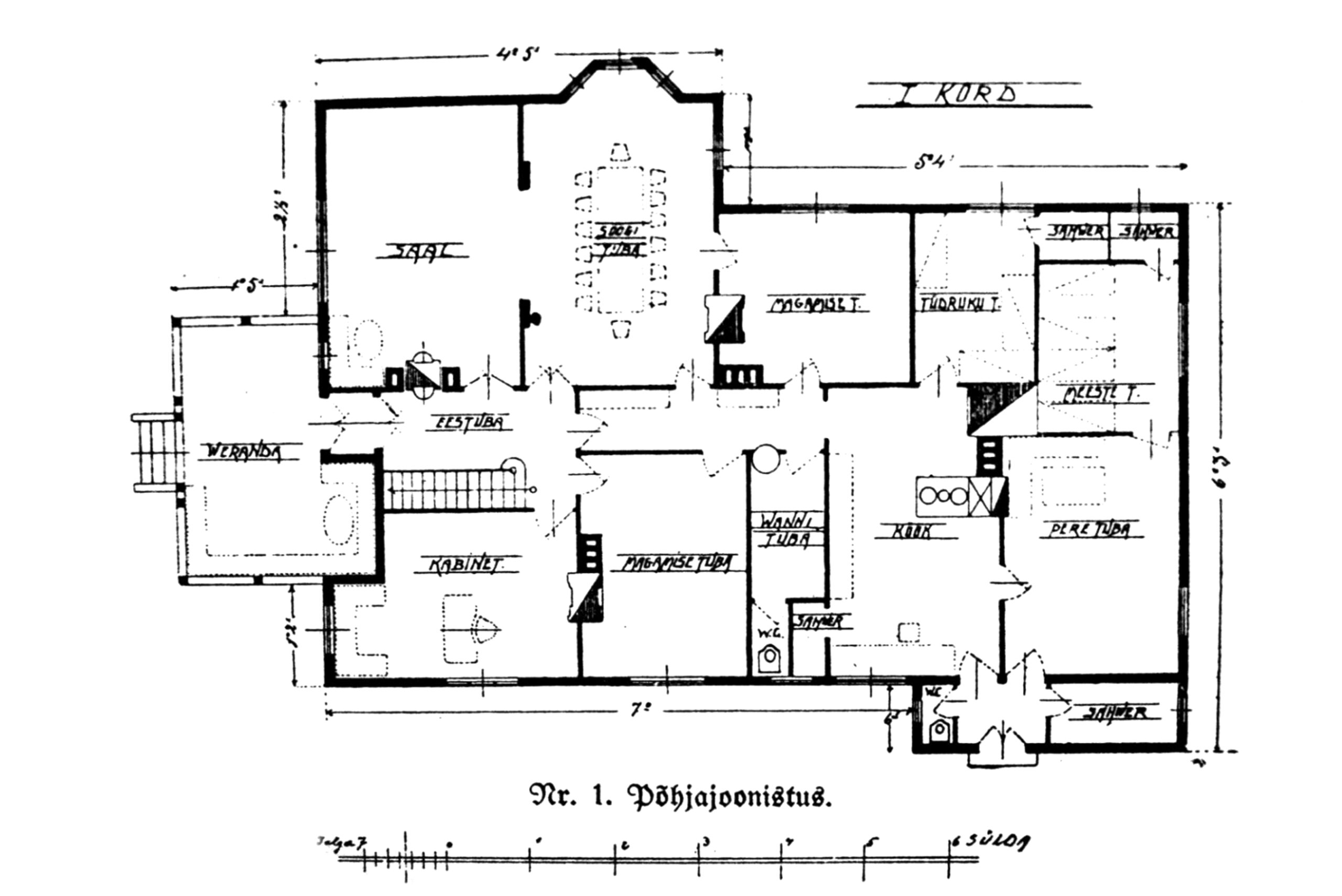
According to the project, the ground floor of the farm’s family house, a large Jugendstil-style wooden house with four chimneys, had a floor area of 300 square meters. In addition to that, there was an open and spacious veranda (25 square meters), and a total of approximately 400 square meters of usable space, including the attic floor (mansard) measuring 70-80 square meters. According to the project, the living spaces had a height of 3.35 meters. On the ground floor, there was a spacious shared kitchen for the farm workers and the family, a large room used as a dining and living room, and separate bedrooms for boys and girls.
On the master’s side, there were a study/workshop, a guest room/hall, a dining room, two bedrooms, a bathroom, two loos, three pantries, and an open balcony/veranda. The attic floor had three bedrooms, a toilet, and a balcony. Although the house was designed with a bathroom and three toilets, in 1939, there was still no running water on the farm.
The family was deported to Siberia in 1941, and the farm buildings were later used by a local collective farm to accommodate labourers. The house has been destroyed.